Server work never stops.
Automate me is the aim: routine work should run without anyone touching it. Build from the user’s side, with clear steps and no assumed server knowledge. If you solve a problem without contacting support, that is the win.
Company
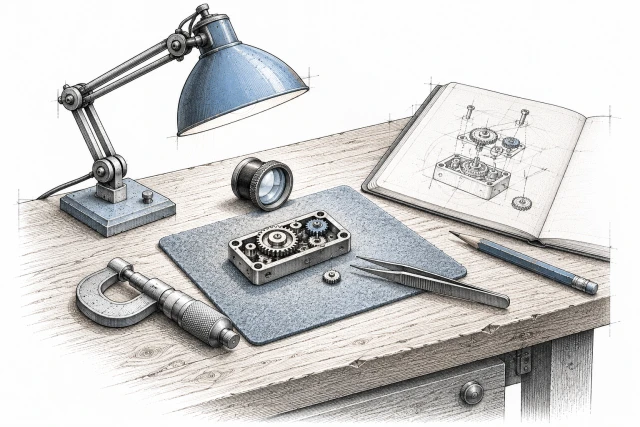

Built by Jan Peter since February 2021, to do the server work for the apps you build. Small on purpose, and public about the work and the reasoning.
01 · The story
February 2021. The server was on Ubuntu 16.04 with PHP 7.0. Laravel 8 needed at least PHP 7.3, and upgrading PHP took my personal website down with it. Pretty standard. Pretty much every server I've ever touched.
That's the maintenance loop: a two-minute deploy that takes two hours, because the server hasn't been touched in months and you have to catch up first. I was running it across my own servers and client servers, and I got tired of it; so I started building something that fixed it for me.
That became strackt: you build the app, we do the server work, on servers you own.
A tool for yourself is easy. A product means it has to work for someone who isn't me, at a moment when I'm not there to help. That takes longer.
Feb 2021
The first idea
Feb 2022
Using it myself
Jan 2023
The development loop
Sep 2024
Steady progress
Aug 2025
A new foundation
Choosing repeatable server setups as the basis for ongoing upkeep.
Mar 2026
Sep 2026
Open signup
Now
From the first idea to the public beta.
02 · The name
Under every app sits a stack of software: the operating system, the database, then the app. strackt is a play on structured stacks, and on the Dutch word strak: tight, pulled straight, no slack.
How it gets built, and what the product has to earn.
Automate me is the aim: routine work should run without anyone touching it. Build from the user’s side, with clear steps and no assumed server knowledge. If you solve a problem without contacting support, that is the win.
If we did it, you can see it in the activity history and Open numbers. The Log records the reasoning in public, before we know how it turns out. If we did not do it, we do not claim it.
It’s your app, on your servers, with your data and your storage. You can leave strackt anytime, and your app keeps running where it is. The product has to stay worth paying for.
A few stacks, looked after properly. We say what we do not do and who we are not for, even when that means saying no to paying customers.

I'm Jan Peter; JP is fine. I write the code, I answer the support questions, and I write The Log. strackt is a company of one, and that's on purpose: staying small isn't a failure to grow, it's the strategy.
I don't need strackt to succeed to be fine, which is exactly why I can hold out for the version I'd want to run my own things on. This website runs on it. Some of the finishing touches were done from a campervan in Liguria, at the cost of a few evening walks.
There is no investor clock and no runway, so nobody sets the pace but me. In December 2021 I threw the whole thing away and rebuilt it; getting back to where it had been was quick, and the result was cleaner. Ansible went the same way once NixOS turned out to rebuild the same way every time. I would rather take the time than ship something I would not trust with my own servers.
I write about the work and the decisions behind it in The Log.
Jan Peter
Founder · solo developer
05 Nov 2026
Month 69 of building strackt. The PHP CVE day, a story rewritten around what happens after the deploy, and less outreach than I promised.
Read on The Log
21 Oct 2026
PHP2Shell's fix landed at 13:34 UTC; our customers' PHP servers had it by 15:30. The speed came from being ready. Here's how, and what still broke.
Read on The Log

15 Oct 2026
A deploy tool leaves you the maintaining; a managed server keeps the server when you go. We built the way out: stop the management, keep the server.
Read on The Log
We don't stack cookies.
Two essentials and one optional. That's the whole stack.
No advertising. No ad networks. Privacy policy